For van life builds, overland rigs, bus conversions, and trailers, a properly designed off-grid electrical system can power rooftop A/C. Using Victron Energy components and correct 12V/24V/48V system planning—battery sizing, solar input, inverter capacity, and safe wiring—you can reduce generator dependence and stay comfortable off-grid.

The Foundation: A Victron-Powered Electrical System
This kind of setup ensures your energy system is not just functional—but future-proof and flexible.
Victron Energy is a popular choice in the mobile off-grid space thanks to its robust components and monitoring tools. A strong system plan usually includes:
Victron MPPT Solar Charge Controller — maximizes solar harvest by continuously tracking the panels’ optimal power point and charging your battery bank efficiently.
Victron MultiPlus or Quattro Inverter/Charger — provides stable AC power for high-demand loads (including many rooftop A/C units) and recharges your battery bank from shore power or a generator when available.
Victron SmartShunt (or BMV) — gives precise visibility into energy use and battery performance, so you can plan run-time, charging, and loads with confidence.
Lithium Battery Bank (LiFePO4) — delivers long cycle life, stable voltage, and efficient storage—ideal for mobile systems that need reliable power under heavy demand.
Victron Cerbo GX + GX Touch Display — the central monitoring hub that brings your system together, showing live solar/shore input, battery status, inverter load, and alerts in one place.
Rooftop A/C Units for Off-Grid Use: 12V, 24V, and 48V Options
🔹 48V A/C Units
Best for: full-timers, hot climates, larger rigs, and higher-demand electrical systems.
Many 48V options support 10,000–12,000+ BTU cooling capacity, making true A/C runtime more realistic with properly sized LiFePO4 + solar (and/or alternator/shore charging)
Pairs naturally with 48V Victron-based systems, helping reduce current draw and minimize wiring losses compared to lower-voltage setups
Often the most efficient option for sustained off-grid cooling when the system is designed correctly
A strong fit for larger battery banks and higher solar input where extended runtime is the goal
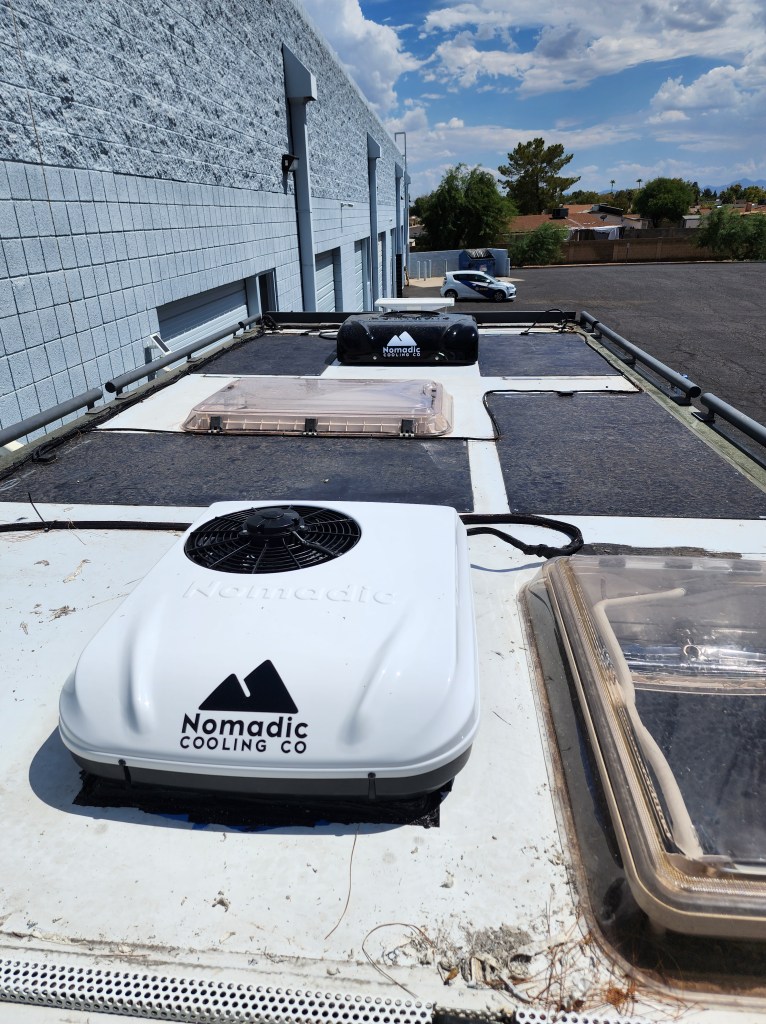
Modern DC air conditioners for vans, RVs, and off-grid builds can operate directly from the battery bank instead of converting power to 120V first. That often improves efficiency and can reduce the strain of high startup current—especially compared to older rooftop units with big compressor surge demands.
Here’s a quick breakdown of voltage tiers:
🔹 12V A/C Units
Best for: smaller rigs, modest cabin sizes, and lighter runtime goals.
A good fit for basic builds, weekend use, or targeted cooling (sleeping area) when sized correctly
Typically lower capacity than higher-voltage systems (often around 6,000–8,000 BTU in many 12V options)
Can require higher current draw, so wiring, fusing, and voltage drop management matter more
🔹 24V A/C Units
Best for: mid-size rigs, moderate climates, and longer runtime goals than most 12V setups.
Commonly seen in the 8,000–10,000 BTU range, depending on the model and application
Requires a 24V battery bank or a properly designed DC-DC approach (only if the A/C manufacturer supports it and the system is sized correctly)
Often a strong “middle ground” with better efficiency and lower current draw than comparable 12V systems
Real-World Design Considerations
Before installing a rooftop A/C in a van, bus, trailer, or overland rig, make sure you can answer these:
- How many hours per day do you want to run the A/C?
- What’s your solar input (watts) and daily energy production (watt-hours)?
- What’s your usable battery capacity (amp-hours and watt-hours)?
- What system voltage are you building around (12V, 24V, or 48V)?
- Are you running DC A/C or a 120V rooftop unit through an inverter?
Pro tip: Higher system voltage can reduce current draw and cable losses, which often improves efficiency and simplifies wiring—especially at higher loads. If you’re starting from scratch, a 24V or 48V LiFePO4 bank paired with a properly sized charging system (solar + alternator/shore) can improve runtime and system stability.
Why Monitoring Matters for Off-Grid A/C
Running rooftop A/C off-grid is easiest when you can see what’s happening in real time—battery state-of-charge, solar input, inverter load, and charging sources. Tools like the Cerbo GX and battery monitors help turn your electrical system into a measurable, manageable power setup instead of guesswork.
Benefits of a monitored system include:
Long-term reliability through early alerts and trend tracking
Less dependence on generators and shore power
Better runtime planning for stealth or remote camping
Improved efficiency through smarter load and charging decisions
Ready to Go Off-Grid—Without Guesswork?
We design Victron-based off-grid power systems for vans, RVs, bus conversions, and trailers—built around your actual loads, runtime goals, and budget. Get a clear plan, a parts list, and guidance you can trust.
Schedule a discovery call and let’s map your electrical + cooling system.
 JackCraft Ventures LLC